The Forest in the Chamonix-Mont-Blanc Valley

In the mountains, forests play a central role in shaping and structuring the landscape. Far from being static, these environments are constantly evolving under the influence of natural factors and human activities. Understanding these processes sheds light on the mechanisms at work and provides a better understanding of the issues currently shaping the forests of the Chamonix Valley.
Forests That Provide a Wide Range of Services
Mountain forests form a complex ecosystem that provides numerous so-called “ecosystem services” to the inhabitants of valleys and mountainous regions. They supply local wood for construction and heating, help regulate the water cycle, and act as carbon sinks by storing CO₂.
They also play an essential role in conserving biodiversity and providing protection against rockfalls, flash floods, and avalanches. Finally, they enhance the quality of life and serve as a space for recreation and outdoor activities.
Already weakened by global warming, the spruce is particularly vulnerable to drought, windstorms—especially in homogeneous stands—and certain pathogens such as the bark beetle. In this context, other so-called thermophilic species, such as Scots pine, could gradually come to play a more significant role in certain low-altitude areas.

A Forest That Grows, A Forest That Changes
In the Chamonix Valley, the forest has undergone rapid change over the past few decades. Its area has nearly doubled since the mid-20th century.
In the Mont Blanc massif, this trend is also evident at higher elevations: the median forest boundary rose by 60 meters between 1952 and 2006 (Martin, 2014), and projections estimate that it could rise by up to 100 meters by 2050, depending on the specific environmental conditions (Schumacher and Bugmann, 2006). However, this trend is not uniform across the region.
Slope aspect alone can cause the forest’s presence to vary by up to 200 meters in elevation. Below 1,500 meters, simulations show an expansion of beech, maple, and mountain ash. Certain so-called thermophilic species, such as Scots pine, could also gain ground and gradually replace spruce in some low-altitude areas. In short, mountain forests are undergoing a restructuring.

A trend driven by several factors
This transformation can be explained by a set of interrelated dynamics. Strongly influenced by climatic conditions and human activities, mountain forests are among the ecosystems most vulnerable to the effects of climate change. Droughts, wildfires, storms, and health crises directly affect the survival of trees and, consequently, all the services they provide to local communities.
To ensure that the forest’s various uses can coexist, the ONF has introduced the Hiker’s Charter.

Public Forests: Regulated and Sustainable Management
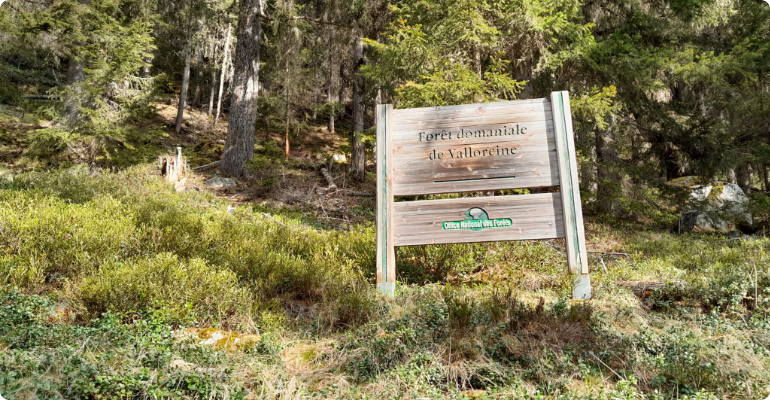
In the Chamonix Mont-Blanc Valley, the communal forests of Les Houches, Vallorcine, and Chamonix are PEFC-certified, a label that guarantees sustainable forest management.
A communal forest is part of the municipality’s private assets while also serving the public interest. Like state-owned forests, it falls under the forestry regime administered by the ONF, which ensures the multifunctional management of these natural areas.
This system governs the sustainable management of public forests and protects their assets against alienation, deforestation, degradation, overexploitation, or misuse. It takes into account three main functions of the forest: economic, through timber production; ecological, through the preservation of biodiversity and the prevention of natural hazards; and social, through public access.
Each communal forest has a management document called a “forest management plan.” Defined by the Forest Code, this roadmap sets out the major silvicultural guidelines for a period of approximately twenty years. It enables the sustainable management of public forests to ensure that society has access to all of their services: timber production, public access, biodiversity, and natural hazard prevention.
In particular, this document specifies which tree species to prioritize, which plantings to consider, and the methods of regeneration. It plans timber harvests and the work to be carried out, taking into account economic, environmental, and social balances.
Learn more about forest management - ONF
Private Forests: A Major Issue in Haute-Savoie
In Haute-Savoie, nearly 70% of forest land is privately owned. In light of these challenges, the Union of Private Foresters serves as a liaison on the ground. This largely volunteer-run organization supports owners in managing their plots, in collaboration with the National Center for Forest Ownership (CNPF), to promote sustainable and balanced forest management.
The CNPF, a public agency dedicated to private forests, relies on field agents to support landowners. Their mission is to advise and inform them, encourage management consortia, preserve ecosystems, and promote diversified forest use, all while preparing for the future of these forests.
National Center for Forest Ownership
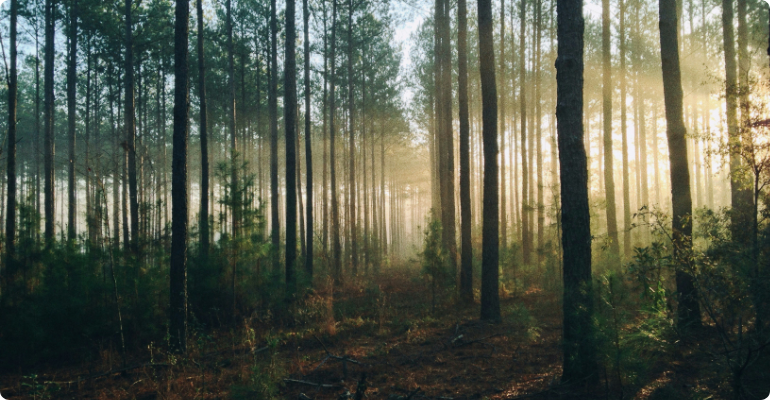
A charter to structure forestry initiatives across the region
The Mont-Blanc Region Forestry Charter is a regional initiative that brings together all stakeholders involved in forestry and the timber industry: local governments, professionals, landowners, and users.
It aligns with the priorities set by the two intermunicipal associations, the CCVCMB and the CCPMB, regarding forestry issues.
It aims to foster a spirit of collaboration among stakeholders, encourage the development of projects, facilitate the search for funding, and implement initiatives that benefit the forest and the services it provides. A steering committee, comprising elected officials and partners, oversees this initiative. While the Charter does not directly fund projects, it provides them with recognition by “certifying” them under its framework.
Given that forest management is a long-term endeavor—spanning 100 to 150 years—the Charter places sustainability at the heart of its priorities.
A charter with five main pillars and concrete actions in the region
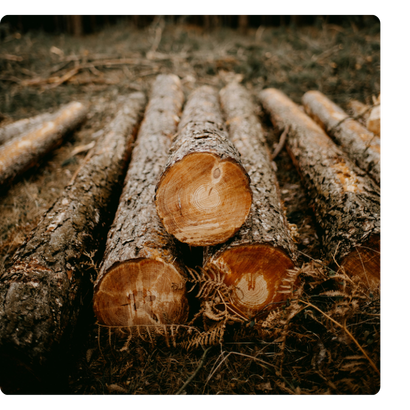
The Forest Charter is structured around five main pillars:
Facilitating the harvesting of timber from local forests
Promoting the use of local wood in construction
Heating and other uses, and raising public awareness of forestry issues
Better taking into account the various roles of forests (biodiversity, protection against natural and climate-related risks, carbon sequestration, and recreation)
Fostering and sustaining the initiative over time.
These guidelines translate into concrete actions, such as adapting forests to climate change, preserving forest heritage, preserving traditional skills and the network of local forestry businesses, expanding the use of local wood in construction, and raising awareness to better balance the various uses of forests.


